Nutrition coaching for athletes who want to develop a performance-enhancing physique, improve recovery and durability, and fuel to perform at their best.

Twice in my life, I had to come to an uncomfortable realisation:
That simply showing up and training hard wasn’t enough.
The first time was going from underage football into the senior team.
Not just any senior team, but one that had won the All-Ireland club title the year before.
As you can imagine, the level of training, intensity, and physicality was a big step up from anything I’d been exposed to before.
I felt that on my body straight away.
Running out of steam halfway through sessions.
Feeling like I’d been hit by a bus the day after training.
Fatigue and niggly injuries starting to build up.
I was always a hard trainer, but I knew I wasn’t the most skilled player, so that alone wasn’t going to be enough.
That’s when I started paying more attention to everything away from the pitch: nutrition, psychology, recovery, lifestyle, S&C.
I went deep into learning about these elements, but more importantly, I actually started applying them.
Over time, I started to notice the extra attention to detail paying off.
I leaned out.
I started showing up to training fresh.
I stopped picking up constant niggles and injuries.
And instead of relying on only hard work and whatever small amount of talent I had,
I became one of the fittest and most consistently available players.
I was regularly at the front of runs in one of the fittest teams in the country, and rarely injured.
Which meant I started getting some game-time, not because I was a great player, but simply because I was there - reliably fit and available.
But more than that, I could finally focus on playing the game, not worrying about my body keeping up with the physical demands.
The second time was after finishing up football.
I needed something to replace the structure, competitiveness, and identity that sport gave me.
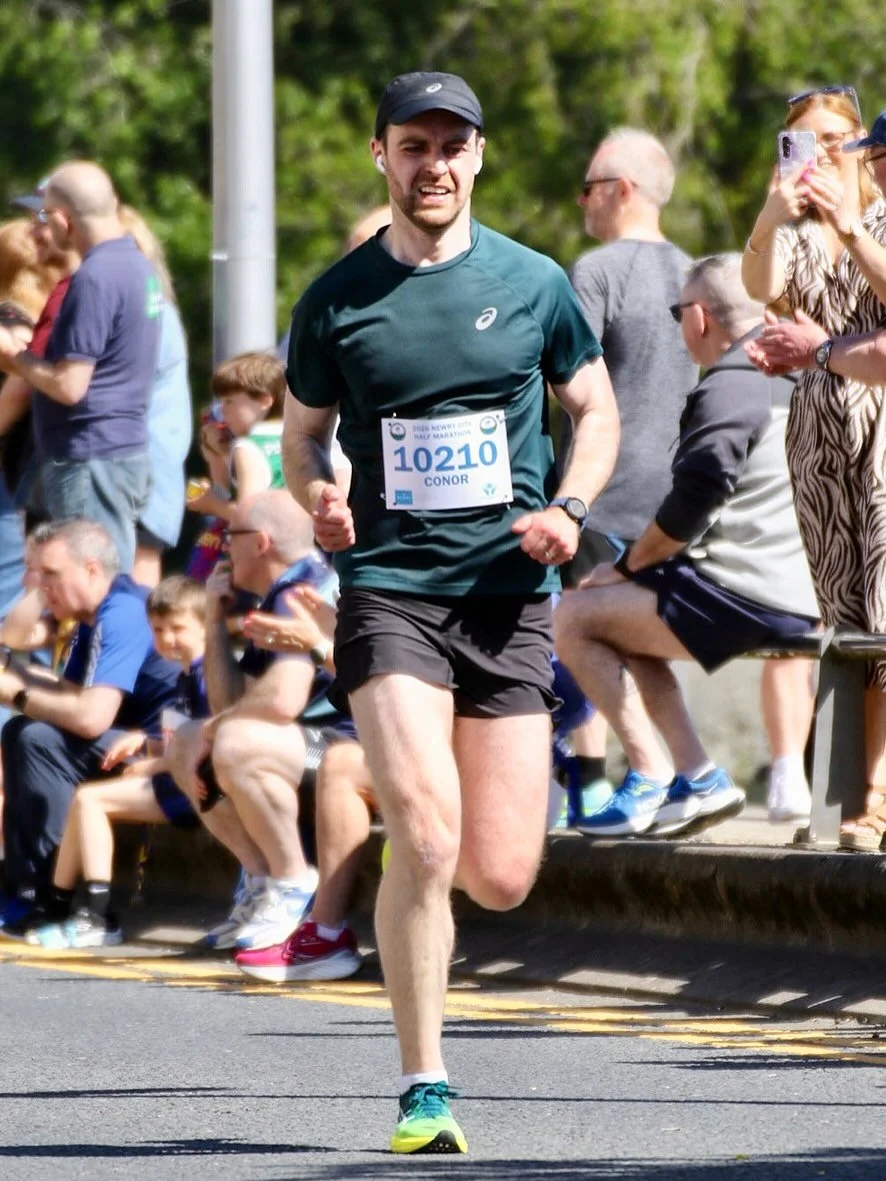
So I started running and signed up for my first marathon.
At the time, I was already about a stone over my fighting weight,
and during the training block I actually gained another few kg, in a period where most people would assume you’d naturally lean out.
Still, the hard training got me to a first marathon of 3:47.
Not bad, but I knew there was more there.
I was heavier than I needed to be, and I hadn’t yet learned how to properly fuel for the specific demands of running.
A few years later, I went back for a second marathon.
This time, I applied the same level of learning and intention to marathon nutrition I had previously applied to GAA.
I dropped the unnecessary bodyfat (about 10kg), dialled in my fuelling, and trained smarter.
I ran 3:09, taking 38 minutes off my previous time.
And more importantly, where previously I felt I had a handbrake on my progress, I now believe my best years as an athlete are still to come.
Those two experiences taught me something I’ve seen repeatedly since, both in myself and in the athletes I now work with:
Training hard is crucial, but your ability to train hard consistently without your body breaking down will be dependant on what you’re doing outside of training.
If your body composition isn’t where you’d like it to be, it could be the handbrake holding you back from performing at your best.
Fuelling for your specific training and competition demands can be the difference between you performing when it matters most versus falling short of your potential.
If you’d like help figuring those things out, you’re in the right place. 🫡
[FREE DOWNLOAD]
The One-Page Nutrition Plan for Athletes